



What Car Grease Lubricant Specifications Matter Most For High-Temperature Engine Areas?
High-temperature engine areas do not give weak grease much time to hide. A lubricant may look stable during storage, but after repeated heat exposure, vibration, moisture, and contact with moving parts, the real problem appears: grease softens, flows away from the contact point, dries into residue, or loses the lubricating film that was supposed to protect the component.
For automotive parts suppliers, repair product distributors, maintenance workshops, and industrial lubricant buyers, car grease lubricnt selection should begin with temperature behavior, not only general lubrication claims. Engine-adjacent areas require grease that can keep its consistency, protect contact surfaces, and reduce failure risk after long-term heat exposure.
Table of Contents
- Start With The Failure Symptom, Not The Product Name
- Temperature Range Is The First Screening Point
- Compatibility Can Decide Whether The Grease Is Safe To Use
- The Specification Sheet Should Answer Practical Buying Questions
- A Better Test Plan For Automotive Buyers
- What Importers And Distributors Should Avoid
- Before Stocking Grease For Heat-Exposed Automotive Parts
Start With The Failure Symptom, Not The Product Name
Softening And Run-Off
In hot engine areas, ordinary grease may become too soft. Once it moves away from the working surface, the component may start to show noise, friction, dry movement, or unstable operation.
For buyers serving repair shops or automotive aftermarket channels, this becomes a repeat complaint. The customer does not usually say “the grease failed.” They say the part became noisy again, the connector felt dry, or the repaired area did not last.
Drying And Carbon-Like Residue
Another common problem is drying. Grease exposed to heat for too long may lose its original texture and leave sticky or hardened residue. This can make future maintenance harder and may interfere with smooth component movement.
A proper grease for engine-area service should be checked for heat stability, not only initial appearance.
Temperature Range Is The First Screening Point
Do Not Judge Only By Room-Temperature Feel
Some greases feel smooth and suitable when tested by hand, but that tells very little about engine-area performance. Buyers should ask how the grease behaves after heat exposure, not only how it feels when opened.
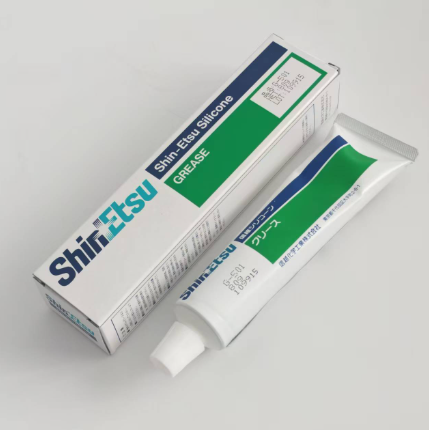
Shin-Etsu g-501 is a Silicone Grease based on Dimethyl Silicone Oil, with a listed temperature resistance range from -50°C to 200°C. This gives automotive and industrial buyers a clearer starting point when evaluating grease for heat-exposed parts.
Heat Stability Should Match The Real Location
Not every automotive part faces the same temperature. A door hinge, sensor connector, bearing area, plastic gear, and engine-adjacent component may all need different lubricant behavior.
Before confirming bulk orders, buyers should identify the actual use point, expected temperature range, contact material, movement type, and service interval. A grease selected for a low-load plastic part may not be suitable for a hotter metal assembly.
Compatibility Can Decide Whether The Grease Is Safe To Use
Plastic Parts Need Extra Attention
Many automotive and electronic parts contain plastic. Some lubricants may create stress cracking or surface damage when used on certain plastics. This is a serious risk for buyers supplying parts with PC, POM, ABS, or similar materials.
G-501 is positioned for plastics and is much less likely to cause stress cracking of PC, POM, ABS, and most other plastics. For buyers handling mixed plastic and metal assemblies, this compatibility point should be checked before large-scale use.
Electrical Areas Need Stable Grease Behavior
Engine compartments and automotive systems may include sensors, connectors, switches, and electrical parts. In these areas, grease must not only lubricate. It also needs to stay stable around moisture and electrical contact zones.
G-501 is used for precision mechanical and electrical applications, including connectors and precision instruments. For distributors, this helps position the grease for customers who need both smooth movement and stable protection in sensitive assemblies.
The Specification Sheet Should Answer Practical Buying Questions
What Is The Base Oil?
A silicone grease based on dimethyl silicone oil can provide different temperature and material behavior from mineral-oil-based grease. Buyers should confirm this early because base oil affects compatibility, heat stability, and application direction.
What Is The Consistency?
Medium consistency can help the grease stay workable during application while still supporting controlled lubrication. For repair shops and production users, this affects dispensing, application thickness, and how the grease stays in place.
What Packaging Fits The Channel?
G-501 can be supplied in 80g, 1kg, and 16kg packaging. Small packaging can support repair, sampling, or retail tool kits, while larger packaging is more practical for production lines, service centers, and industrial users.
A Better Test Plan For Automotive Buyers
Heat Exposure Test
Apply the grease to the real contact material and expose it to the expected service temperature. Check whether it softens, migrates, dries, or leaves residue after the test.
Noise And Friction Check
For plastic gears, switches, sliders, bearings, or small mechanisms, test whether the grease reduces noise and keeps movement smooth after repeated cycles.
Material Compatibility Test
Check plastics, rubber, metal, seals, and coatings that may contact the grease. This step is important before using any car grease lubricnt in mixed-material automotive parts.
Moisture Exposure Check
Automotive parts may face humidity, washing water, condensation, or outdoor storage. Moisture resistance should be reviewed before the grease is used in connectors, exterior components, or under-hood areas.
What Importers And Distributors Should Avoid
Do Not Sell One Grease For Every Automotive Part
Automotive customers may ask for one general lubricant, but professional suppliers should separate the use cases. Engine-area heat, plastic compatibility, electrical protection, bearing load, and water exposure are different requirements.
A clearer recommendation reduces wrong-use complaints and helps distributors build trust with repair shops and parts manufacturers.
Do Not Compare Only By Unit Price
A lower-priced grease may create higher cost if it fails under heat, damages plastic, causes noise complaints, or requires frequent reapplication. For B2B buyers, the real cost includes replacement work, customer claims, downtime, and lost repeat orders.
Before Stocking Grease For Heat-Exposed Automotive Parts
A grease used near engine areas should be evaluated by temperature range, base oil, plastic compatibility, moisture resistance, consistency, packaging, and real-use testing. The product should stay where it is needed, keep the contact surface lubricated, and avoid creating new material risks.
If your business needs silicone grease for automotive parts, plastic mechanisms, electrical connectors, repair channels, or industrial maintenance supply, come to us to review the application before bulk ordering. Send the target component, working temperature, material contact, packaging need, annual demand, and current failure problem. Our team can help match a grease option that is more suitable for high-temperature service and less likely to create softening, drying, or early lubrication failure.