



Why Do Many Industrial Damping Grease Formulas Fail Under High-Temperature Operating Conditions?
In high-temperature equipment, damping failure usually does not happen all at once. The first sign may be a control knob that feels lighter than before, a hinge that moves too freely, a sliding part that starts to vibrate, or a mechanism that no longer gives the same resistance during operation. When the damping medium thins, migrates, oxidizes, or loses film stability, the part can still move, but it no longer moves with control.
For equipment manufacturers, automotive component suppliers, Electronics assembly factories, precision mechanism producers, and industrial maintenance teams, Industrial Damping Grease should be selected by long-term temperature behavior, not only by initial viscosity. A grease that feels suitable during room-temperature testing may fail quickly once heat, load, vibration, and repeated motion work together.
Table of Contents
- The First Stage: Viscosity Starts To Change
- The Second Stage: Heat Pushes The Material Out Of Position
- The Third Stage: Oxidation And Aging Start To Show
- The Fourth Stage: Damping Failure Becomes A Product Complaint
- What Buyers Should Test Before Approving The Formula
- Where High-Viscosity Silicone Fluids Fit Better
- A More Reliable Way To Plan High-Temperature Damping
The First Stage: Viscosity Starts To Change
Initial Feel Can Be Misleading
Many damping materials are tested by hand feel during sampling. The movement feels slow, smooth, and controlled at room temperature. But in real machines, the part may work near motors, lamps, heaters, electrical components, control panels, vehicle interiors, or sealed housings where heat builds up.
Once temperature rises, low-stability formulas may thin too much. The damping force drops, movement becomes loose, and the final product feels inconsistent.
Stable Viscosity Protects Product Feel
Damping is about controlled resistance. If viscosity changes too much under heat, the user experience changes with it. This is especially important for rotary dampers, sliding mechanisms, knobs, switches, covers, hinges, and precision control parts.
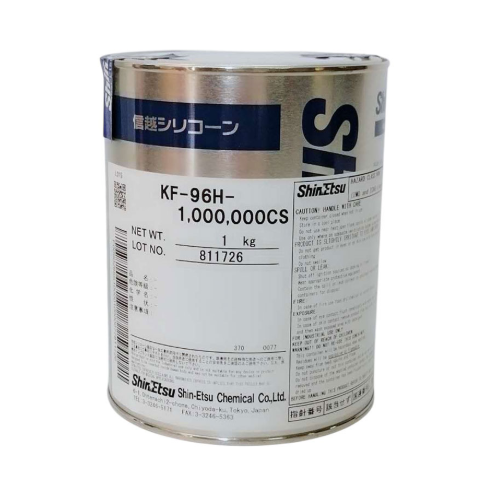
The KF-96-1000000cs industrial damping material is an ultra-high viscosity dimethyl Silicone Fluid with 1,000,000 cSt viscosity at 25°C. For buyers working with high-resistance damping applications, this viscosity level gives a useful starting point for controlled movement design.
The Second Stage: Heat Pushes The Material Out Of Position
Grease Migration Creates Uneven Damping
Under heat, some damping formulas may soften and move away from the contact area. Once the material no longer stays where it is needed, the mechanism may lose resistance in one section while collecting excess material in another.
For manufacturers, this creates unstable quality. One product may still feel correct, while another from the same batch may feel too loose after temperature exposure.
Film-Forming Stability Matters
A damping material should remain on the working surface long enough to protect the movement feel. Stronger film stability helps maintain smoother operation and reduces the chance that the mechanism becomes dry, noisy, or uncontrolled after repeated cycles.
This is why high-temperature damping selection should include migration behavior, not only viscosity value.
The Third Stage: Oxidation And Aging Start To Show
High Temperature Accelerates Formula Weakness
Heat can speed up oxidation and aging. Once the damping medium begins to degrade, the product may show several issues: changed consistency, residue formation, sticky movement, weaker protection, or rough operation.
For industrial buyers, this means the real test is not only whether the part works after assembly. The better question is whether it still works after continuous heat exposure and repeated movement.
Flash Point Gives One Useful Reference
KF-96-1000000cs has a flash point above 315°C. This does not mean every application should operate near that limit, but it gives buyers a useful reference when comparing damping materials for higher-temperature environments.
Equipment teams should still test the material under their own working temperature, contact materials, movement frequency, and service time.
The Fourth Stage: Damping Failure Becomes A Product Complaint
Loose Movement Feels Like Poor Manufacturing
End users may not know the damping material inside the product. They only feel that a control part is loose, unstable, noisy, or no longer premium. In automotive interiors, electronics, appliances, instruments, and precision mechanisms, this can damage the perceived value of the whole product.
For suppliers, damping failure often becomes a quality complaint even if the structure itself has not broken.
Replacement Cost Is Higher Than Material Cost
Changing damping grease after assembly is not simple. The part may need to be opened, cleaned, reworked, or replaced. In some products, re-lubrication is not practical after final assembly.
That is why choosing the right Industrial Damping Grease before production is cheaper than correcting damping failure after customer feedback.
What Buyers Should Test Before Approving The Formula
Heat Aging Under Real Conditions
Test the damping feel before and after heat exposure. Do not only check whether the material still exists. Check whether movement resistance, smoothness, and recovery remain acceptable.
Material Compatibility
The damping medium may contact plastics, rubber, metals, coatings, or electronic parts. Buyers should confirm whether the material causes swelling, staining, softening, corrosion, or surface change.
Cycle Testing
A part may feel stable for 20 cycles but change after thousands of movements. Damping should be checked after repeated operation, especially for automotive parts, control knobs, hinges, dampers, and precision mechanisms.
Production Handling
A material that performs well in testing should also be easy to dispense, apply, store, and control during production. Packaging options such as 1kg and 16kg can support different trial and production needs.
Where High-Viscosity Silicone Fluids Fit Better
High-viscosity dimethyl silicone fluid is often considered when the buyer needs smooth damping, resistance to temperature change, stable film behavior, and controlled movement over time. It may be used in damping oil applications, industrial mechanisms, protective film uses, sealing support, and high-viscosity lubrication-related work.
For buyers comparing Industrial Damping Grease options, the decision should follow the working condition:
What temperature does the part actually reach?
How much resistance should the movement keep?
Is the part sealed or exposed?
Will the material contact plastic, rubber, or metal?
How many cycles must the mechanism survive?
Does the customer care about premium movement feel?
Can the part be serviced after assembly?
These questions help prevent the common mistake of choosing a damping material only by room-temperature feel.
A More Reliable Way To Plan High-Temperature Damping
High-temperature damping failure usually follows a clear path: viscosity changes, material migration begins, oxidation or aging appears, and the product finally loses controlled movement. By the time the customer complains, the cost is already higher than the original material decision.
If your project needs a high-viscosity silicone material for damping, sealing, protective film, or controlled movement applications, come to us to review the working condition before bulk ordering. Share the operating temperature, movement type, contact material, required damping feel, cycle target, packaging need, and expected production volume. Our team can help match a more suitable option so the mechanism keeps stable resistance under heat instead of losing damping performance too early.