




How Did Silicone Materials Evolve? From Early Laboratories to Modern Applications
Silicone materials are now used in kitchenware, phone cases, medical tubing, seals, Electronics, electric vehicles, aerospace systems, and many other products. Their development spans more than two centuries, beginning with early silica research and progressing to modern organosilicon chemistry and industrial silicone manufacturing.
Terminology note: Silica gel and silicone rubber are different materials. Silica gel is a porous inorganic material based on hydrated silicon dioxide, while silicone rubber is a flexible polysiloxane elastomer.
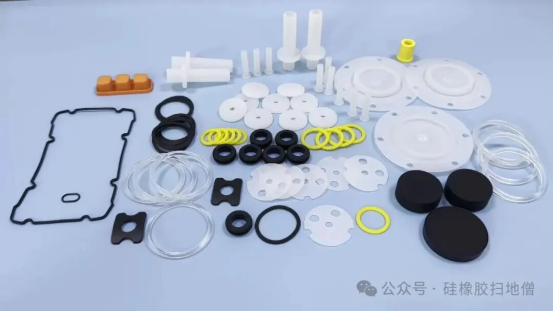
Table of Contents
Early Research into Silica
The history of silica gel began with research into silicon dioxide, silicic acid, and colloidal materials.
In 1846, French chemist Jacques-Joseph Ebelmen observed gel formation during the hydrolysis of silicon tetrachloride. In 1861, Scottish chemist Thomas Graham produced silica sol by combining sodium silicate with hydrochloric acid and purifying it through dialysis. His research established important foundations for colloid chemistry and the scientific understanding of sols and gels.
Organosilicon chemistry developed alongside this research. In 1863, Charles Friedel and James Crafts synthesized tetraethylsilane. From the late 19th century to the early 20th century, Frederic Kipping systematically studied organosilicon compounds and helped establish the terminology used in silicone chemistry.
From Laboratory Research to Industrial Production
Walter A. Patrick developed a method for producing silica gel from sodium silicate on a larger scale. His process was patented in 1919 and helped turn silica gel into a commercially useful adsorbent for moisture and gas control.
A major breakthrough in silicone manufacturing occurred around 1940 when Eugene Rochow developed the direct process for producing methylchlorosilanes. Before this method, organosilicon compounds were mainly prepared through laboratory-scale Grignard reactions, which were costly and difficult to scale.
The direct process made continuous industrial production of silicone monomers possible. By 1947, silicone manufacturing had moved firmly from laboratory chemistry into commercial production.
World War II Accelerated Development
World War II created strong demand for materials capable of withstanding heat, cold, moisture, electrical stress, and difficult sealing conditions.
Silicone materials were used in:
Aircraft engine seals
Moisture-resistant packaging
High-temperature gaskets
Protective military electronic components
Military demand encouraged manufacturers to expand production capacity and improve processing technology. After the war, these technologies were transferred to civilian applications in construction, transportation, electronics, and consumer products.
Aerospace and Medical Applications
The growth of aviation and space exploration during the 1950s created demand for materials that could perform under extreme temperature changes, vacuum conditions, radiation, and long-term environmental exposure.
Silicone rubber became useful for seals, gaskets, cable jackets, insulation components, rockets, aircraft, and spacecraft. General-purpose formulations may remain flexible at approximately -60°C and operate continuously at around 200°C, while specialized grades can withstand higher short-term temperatures.
Medical applications expanded during the 1960s. Properly formulated medical-grade silicone can provide flexibility, thermal stability, sterilization resistance, and suitable biocompatibility.
Common applications include:
Medical tubing
Drainage catheters
Respiratory masks
Prosthetic products
Healthcare seals
Implantable device components
Medical suitability depends on the exact formulation, manufacturing controls, type of body contact, and applicable biological safety testing.
Expansion During the 1980s
Silicone materials entered a period of rapid global expansion during the 1980s. Applications grew across construction, electronics, automotive manufacturing, healthcare, and consumer goods.
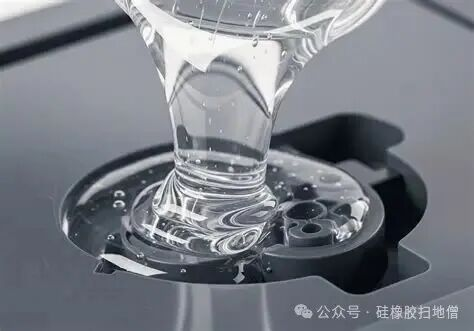
Liquid silicone rubber technology also matured during this period. Automated LSR injection Molding enabled high-volume production with improved dimensional consistency and process control.
LSR became widely used for:
Baby bottle nipples
Medical components
Sealing parts
Keypad covers
Tableware
Precision-molded consumer products
Production capacity gradually expanded from Europe and North America into Japan, South Korea, Taiwan, and mainland China. Silicone completed its transition from a specialized industrial material to a widely used commercial and consumer material.
Silicone in the 21st Century
Modern silicone materials have entered nearly every major industry.
Environmental Protection
Porous silica gel is widely used for moisture adsorption, gas drying, humidity control, separation processes, and air purification. Modified silica adsorbents can also capture certain metal ions or organic contaminants.
Renewable Energy
Silicone-based materials are used in electric vehicles, photovoltaic systems, and energy-storage equipment.
Applications include:
Thermal interface pads
Battery-pack sealants
Electronic potting compounds
Electrical insulation
Cable and connector protection
Environmental sealing
These materials support heat transfer, moisture protection, vibration resistance, and electrical safety.
Food-Contact Products
Qualified food-grade silicone rubber provides flexibility, heat resistance, low odor, and repeated-use durability. It is commonly used for baking molds, spatulas, baby bottle nipples, food-storage covers, and flexible kitchen utensils.
Food-contact suitability must be confirmed through applicable regulatory testing. Industrial silicone should not be used for food contact without valid compliance documentation.
Consumer and Personal-Care Products
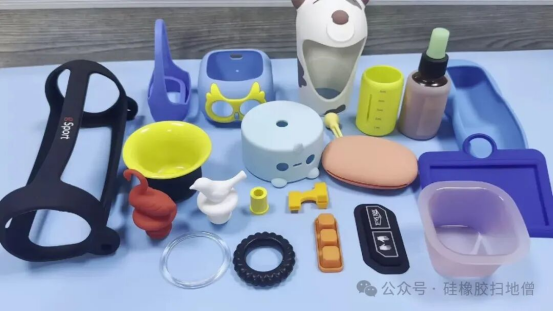
Silicone materials are widely used in phone cases, smartwatch bands, earphone components, facial cleansing devices, cosmetic applicators, and wearable electronics. Their flexibility, soft-touch feel, slip resistance, and durability support frequent contact with the human body.
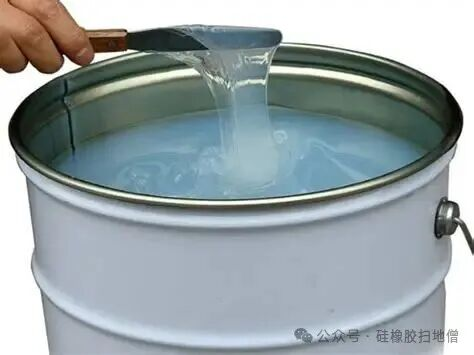
Key Development Milestones
| Period | Development | Significance |
|---|---|---|
| 1846 | Jacques-Joseph Ebelmen observed silica gel formation | Established an early foundation for silica gel research |
| 1861 | Thomas Graham studied silicic acid colloids | Advanced colloid chemistry |
| 1863 | Friedel and Crafts synthesized tetraethylsilane | Supported the development of organosilicon chemistry |
| 1899-1940s | Frederic Kipping studied organosilicon compounds | Established foundations for silicone chemistry |
| 1919 | Walter A. Patrick patented a silica gel production process | Supported commercial silica gel production |
| Around 1940 | Eugene Rochow developed the direct process | Enabled industrial silicone monomer manufacturing |
| 1950s | Silicone entered aerospace applications | Demonstrated performance under demanding conditions |
| 1960s | Medical silicone applications expanded | Brought silicone into healthcare |
| 1980s | Liquid silicone rubber processing matured | Enabled high-volume precision molding |
| 21st century | Silicone entered energy, electronics, and consumer markets | Expanded silicone into everyday applications |
Frequently Asked Questions
Are Silica Gel and Silicone Rubber the Same?
No. Silica gel is a hard, porous inorganic material primarily composed of hydrated silicon dioxide. It is commonly used as a desiccant or adsorbent.
Silicone rubber is a flexible polysiloxane elastomer used in seals, molds, medical tubing, electrical components, and kitchenware. The two terms should not be used interchangeably.
Why Can Silicone Rubber Withstand High Temperatures?
Silicone rubber has an Si-O-Si molecular backbone. The silicon-oxygen bond has relatively high bond energy, helping the material resist heat and oxidation more effectively than many conventional plastics.
Actual temperature resistance depends on formulation, exposure duration, atmosphere, and mechanical stress.
Is Food-Grade Silicone Safe?
Properly manufactured food-contact silicone can be safe when used within its specified conditions. The exact formulation should comply with applicable requirements for migration, heavy metals, residual substances, and other restricted components.
Not every silicone product is food-grade. Compliance documents should always be checked before use.
Why Is Silicone Important for Electric Vehicles?
Electric vehicles require effective thermal management, electrical insulation, electronics protection, and environmental sealing. Silicone materials can meet these needs in battery packs, motors, electronic control systems, wiring, lamps, and connectors.
Can Silicone Rubber Be Recycled?
Recycling cured silicone rubber is difficult because of its stable crosslinked structure. Current approaches include crushing it for use as a filler, chemical depolymerization to recover siloxanes, and controlled energy recovery.
More economical chemical recycling technologies remain an important research direction.
Conclusion
The development of silicone materials was not the result of a single discovery. Early silica research established the scientific foundation, industrial processes enabled commercial production, and demanding aerospace and medical applications validated performance.
Today, silicone supports renewable energy, electronics, transportation, healthcare, food-contact products, and everyday consumer goods. Continued advances in polymer design, curing systems, fillers, and recycling technologies are extending its applications even further.
Disclaimer
Some information in this article was compiled from publicly available industry materials and is provided for general reference and technical exchange. Product performance varies according to formulation and application conditions. Specific materials should be evaluated through technical documentation and appropriate testing before use.
This article was adapted from content published by the WeChat public account "Silicone Rubber Sweeping Monk." Please contact us if any reproduced material affects intellectual property rights or other lawful interests.
