




Is Your Conformal Coating Cracking under Extreme Temperatures?
In the precision world of aerospace and automotive Electronics, thermal cycling is the ultimate silent killer of PCB integrity. Engineers often face a frustrating reality: a Conformal Coating that passes initial lab testing but begins to develop microscopic cracks once deployed in the field. These fractures usually occur because the coating lacks the necessary coefficient of thermal expansion (CTE) to match the components it covers. Once the seal is broken, moisture and contaminants seep in, leading to electrochemical migration and catastrophic board failure. To combat this widespread industry pain point, many Tier-1 manufacturers are shifting their strategy toward high-elongation materials like Silicone gel for circuit protection to ensure long-term reliability.
The Mechanics Of Thermal Stress And Coating Fatigue
The primary cause of coating failure in harsh environments is mechanical stress induced by rapid temperature swings. Traditional acrylic or epoxy Coatings can become brittle over time, especially when exposed to the sub-zero temperatures of high-altitude flight or the intense heat of an engine bay. When the PCB substrate expands and contracts at a different rate than the rigid coating, the resulting tension forces the material to snap. This isn't just a cosmetic issue; a cracked coating offers zero protection against the sulfur-rich environments or high humidity levels that lead to dendritic growth between fine-pitch components.
Integrating a specialized Silicone gel for circuit protection provides a "stress-relieving" buffer that rigid coatings simply cannot match. Unlike hard resins, these gels maintain a soft, jelly-like consistency across a vast temperature spectrum, typically from -45°C to 200°C. This inherent flexibility allows the protective layer to move in harmony with the delicate solder joints and surface-mount devices (SMDs), effectively absorbing the mechanical energy of thermal expansion. For B2B buyers focused on reducing warranty claims, this physical resilience is a fundamental requirement for maintaining the mission-critical status of their electronics.
Why Material Purity Dictates Production Yield
Beyond thermal stability, the chemical interaction between the protective layer and the circuit components is a major concern for OEM and ODM partners. Many standard-grade coatings contain volatile organic compounds (VOCs) or residual ions that can actually trigger corrosion under the film. In high-frequency applications, even a slight change in the dielectric constant due to material degradation can skew signal integrity. This is why sourcing a high-purity Silicone gel for circuit protection is essential for projects that demand high signal fidelity and low noise.
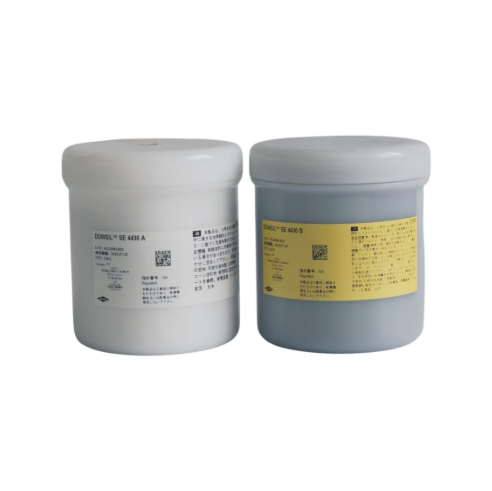
Our role as a technical supplier is to provide materials that bridge the gap between complex engineering requirements and mass-market scalability. The formulation of products like DOWSIL SE 4430 is specifically optimized for automated dispensing systems, ensuring that our ODM partners can achieve a consistent, void-free layer across thousands of units. This precision in application is what prevents the formation of air pockets—the primary breeding ground for corona discharge in high-voltage modules. By utilizing a gel that flows into every crevice before curing into a stable, self-healing barrier, manufacturers can significantly boost their end-of-line yields and eliminate the need for costly manual touch-ups.
Strategic Sourcing For Harsh Environment Electronics
In a market where supply chain transparency is as important as technical specs, choosing the right material partner is a strategic decision. Procurement officers are no longer just looking for a "chemical vendor"; they need a supplier that understands the rigorous qualification standards of the automotive (IATF 16949) and industrial sectors. When you specify a Silicone gel for circuit protection from our inventory, you are securing a material that has been vetted for its chemical resistance and dielectric strength.
This proactive approach to circuit defense is what separates a reliable product from one prone to field failures. Whether you are developing 5G infrastructure or EV power electronics, the ability to protect sensitive junctions from vibration and thermal shock is the ultimate competitive advantage. We work closely with engineering teams during the prototyping phase to ensure that the material's viscosity and cure time are perfectly aligned with their specific manufacturing environment, providing the technical backstop necessary for a successful product launch.
Conclusion
Cracked coatings are a preventable failure point that can tarnish a brand's reputation for quality. By moving away from brittle resins and adopting advanced silicone gel technology, you can ensure that your circuits remain isolated and operational regardless of the environmental extremes. The goal is to move from reactive repairs to proactive protection.
If you are currently experiencing high failure rates during environmental stress screening (ESS) or are worried that your existing coating won't survive a 10-year service life, we are here to help. Our team can provide a deep-dive analysis of your current material stack-up and suggest a gel-based alternative that fits your assembly line. If you need a custom ODM formulation or specific technical data on thermal conductivity and dielectric constants, simply reach out to us. We offer direct engineering support to ensure your project stays on track and your circuits stay protected.