




Valve Grease Chemical Resistant: Efficient Bulk Choice for Oil And Gas Valve Maintenance
In oil and gas service, valve maintenance is never just a routine task. It affects sealing reliability, operating torque, shutdown risk, service intervals, and the total cost of keeping equipment running. When valves work in contact with fuels, solvents, process chemicals, and changing temperatures, ordinary lubricants often become the weak point. They may thin out, lose structure, evaporate too quickly, or fail to protect sealing surfaces over time.
That is why a reliable chemical resistant valve grease matters so much in industrial maintenance programs. For valve manufacturers, maintenance contractors, industrial distributors, and OEM buyers, the goal is not simply to buy grease by the kilogram. The real goal is to reduce lubrication failure, extend service intervals, and keep valve performance more stable in harsh working environments.
Our product fits this need directly. It is a fluorosilicone-based valve grease thickened with PTFE, developed for valves, seals, and bearings operating in chemically aggressive conditions. For buyers serving oil and gas applications, that makes it much more than a general-purpose grease. It becomes a practical material choice for controlling long-term maintenance cost.
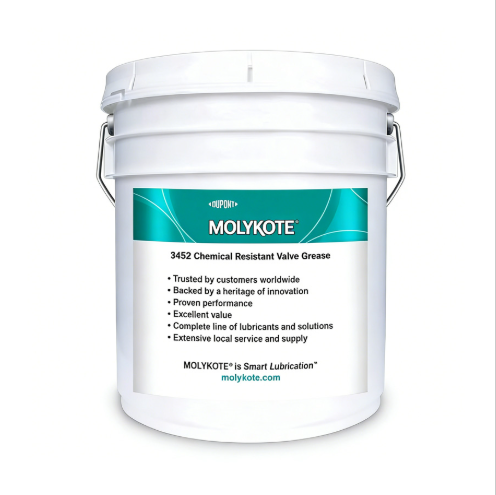
Table of Contents
- Why Oil And Gas Valve Maintenance Needs A Different Grease
- Why Chemical Resistance Directly Affects Maintenance Cost
- How Our Product Connects To Oil And Gas Use
- Why Temperature Stability Matters Along With Chemical Resistance
- Why Bulk Purchasing Makes More Sense For Industrial Buyers
- The B-End Pain Points Buyers Are Really Trying To Solve
- Why OEM And ODM Support Add Practical Value
- Why A Reliable Grease Often Saves More Than A Cheap One
- Conclusion
Why Oil And Gas Valve Maintenance Needs A Different Grease
Valve service in oil and gas is demanding because the equipment is exposed to more than simple mechanical load. It may face hydrocarbons, solvents, cleaning agents, aggressive vapors, and temperature changes that quickly expose the limits of standard lubricants. In these situations, grease failure often shows up in familiar ways: harder actuation, inconsistent torque, faster seal wear, lubricant loss, or rising maintenance frequency.
For B-end buyers, this creates a common sourcing problem. A grease may look acceptable in a short test, but once it enters real operating conditions, its weaknesses become expensive. Maintenance teams then spend more time relubricating, replacing parts, or dealing with valves that no longer move as expected. Over a large installed base, these small failures become a serious cost issue.
This is why chemical resistance is not a marketing detail in this category. It is one of the core performance requirements. A stable grease helps protect the valve system when exposure conditions are harsh and service access is not always convenient.
Why Chemical Resistance Directly Affects Maintenance Cost
Maintenance cost is often discussed in terms of labor and spare parts, but lubricant stability plays a major role in both. When grease loses its integrity under chemical exposure, it no longer protects surfaces and sealing points the way it should. The result is usually rising friction, unstable movement, and more frequent intervention.
A strong chemical resistant valve grease reduces that risk because it is designed to resist the media that cause conventional lubricants to degrade. Instead of breaking down quickly in contact with fuels, solvents, or chemical vapors, it keeps its structure and lubrication behavior more stable. That stability supports more predictable valve operation and helps reduce avoidable maintenance events.
For industrial buyers, this matters because the hidden cost of poor grease is rarely visible in the initial quotation. It appears later as downtime risk, service labor, replacement parts, and customer complaints.
How Our Product Connects To Oil And Gas Use
Our product is especially relevant for this application because its performance profile matches the practical needs of oil and gas valve maintenance. It is described as a white fluorosilicone-based grease with PTFE, engineered for valve, seal, and bearing lubrication in chemically aggressive environments. It is also positioned for slow-moving, heavy-load components where long-term stability, low volatility, and consistent torque behavior are important.
That combination is valuable in valve systems because many oil and gas valves do not simply need lubrication. They need lubrication that stays reliable over time while exposed to chemicals and thermal stress. A grease that maintains film integrity, resists evaporation, and remains compatible with common sealing materials can help reduce maintenance pressure across the full service cycle.
This is where buyers usually become more selective. They are not just asking whether the grease lubricates. They are asking whether it will still perform after exposure, after temperature cycling, and after long service intervals. That is the level where the right product starts to show real value.
Why Temperature Stability Matters Along With Chemical Resistance
In oil and gas environments, chemical exposure is only part of the challenge. Temperature change is the other half. A grease that performs well chemically but loses consistency under thermal cycling will still create maintenance problems. Hardening, softening, separation, or excessive volatility can all shorten service life and make valve behavior less predictable.
Our product addresses this issue with a service temperature range of -30°C to 230°C and low evaporation behavior. In practical terms, this helps support both cold-start operation and elevated-temperature service without rapid lubricant loss. For maintenance teams and equipment manufacturers, that means fewer lubrication-related surprises and more confidence in long-term performance.
This matters especially for valves installed in remote systems, enclosed assemblies, or process lines where regular relubrication is not convenient. In those cases, grease stability is closely tied to maintenance efficiency.
Why Bulk Purchasing Makes More Sense For Industrial Buyers
For oil and gas valve maintenance, bulk sourcing is not only a purchasing decision. It is also a standardization decision. When manufacturers and maintenance teams rely on one stable grease across repeated service work or product lines, they reduce variation in performance and simplify internal processes.
That has several advantages. Production teams can work with more consistent material behavior. Maintenance contractors can reduce confusion in field application. Purchasing teams can forecast demand more clearly. Distributors and private label buyers can build more reliable supply programs around repeat orders.
For OEM projects, this matters even more. A valve supplier cannot afford to change critical maintenance materials too often without increasing qualification work and performance uncertainty. Bulk supply from a reliable source helps reduce that risk and supports more stable product delivery.
The B-End Pain Points Buyers Are Really Trying To Solve
When industrial buyers look for a valve grease supplier, their biggest pain points are rarely limited to price. More often, they are trying to avoid inconsistency. They worry about batch variation, lead time disruption, unclear technical communication, packaging that does not fit their operation, and materials that behave differently once scaled into real use.
These concerns are valid. In industrial lubrication, a weak supplier relationship can create as much trouble as a weak product. A sample may perform well, but if later deliveries are inconsistent or support is limited, the buyer absorbs the cost through testing delays, process adjustment, and operational uncertainty.
That is why supply capability matters. Buyers want a partner that can support repeat orders, technical discussion, and project-based cooperation rather than only one-time transactions.
Why OEM And ODM Support Add Practical Value
In this category, OEM and ODM support help buyers build a more workable supply model. OEM service can make a difference when customers need customized packaging, labeling, or supply arrangements that fit plant operations, distributor programs, or private label channels. These details may look secondary, but they often affect warehouse handling, service efficiency, and downstream presentation.
ODM support is valuable when the application is more specialized. Some buyers may need supply coordination around specific valve programs, maintenance systems, or industrial market requirements. A supplier that can support these needs is easier to work with in long-cycle business, especially when the goal is not a single order but an ongoing industrial supply relationship.
For B-end customers, that flexibility improves purchasing efficiency and makes the supplier more useful beyond the basic product itself.
Why A Reliable Grease Often Saves More Than A Cheap One
A low quotation can be attractive, but oil and gas valve maintenance is an area where low upfront cost often leads to higher total cost. If grease fails early, the savings disappear quickly through relubrication, labor, seal wear, and service interruption.
A stable chemical resistant valve grease helps change that cost structure. It supports smoother movement, better sealing protection, longer grease life, and more predictable maintenance intervals. For experienced buyers, these advantages are worth far more than a small reduction in purchase price.
That is why the better question is not which grease is cheapest today. It is which grease helps reduce maintenance burden over the operating life of the valve.
Conclusion
In oil and gas valve maintenance, lubrication quality has a direct effect on service cost, reliability, and long-term operating efficiency. A dependable chemical resistant valve grease helps protect valves against chemical exposure, temperature variation, lubricant loss, and rising maintenance frequency. That makes it a practical bulk choice for industrial buyers who need stability, not just supply.
Our product aligns well with this demand because it combines fluorosilicone chemistry, PTFE thickening, strong chemical resistance, low volatility, and broad temperature stability in a formulation intended for valves, seals, and bearings in aggressive environments. For valve manufacturers, industrial distributors, OEM buyers, and maintenance-focused solution providers, that creates a more efficient path to reducing lubrication-related service issues.
If you are reviewing grease options for oil and gas valve programs, planning a bulk order, or comparing suppliers for OEM or ODM cooperation, send us your operating conditions and project requirements. We can help you evaluate the right supply approach and provide practical support for your next maintenance or production program.