




Are Silicone Softeners Hydrophilic?
silicone softeners are not automatically hydrophilic. Some silicone softeners are designed to improve water absorbency, while others mainly focus on smoothness, slip, fullness, and soft hand feel. In textile finishing, this difference matters a great deal because a fabric may feel very soft after treatment but still lose absorbency if the silicone structure is too hydrophobic. That is why mills and finishers usually ask a more specific question: which type of silicone softener can deliver both softness and hydrophilicity at the same time.
This article explains whether silicone softeners are hydrophilic, what determines their wetting behavior, how different formulations perform on fabric, and how to choose the right product for your finishing target. You can explore INNOSILICONE solutions on our textile and leather silicone softeners page.
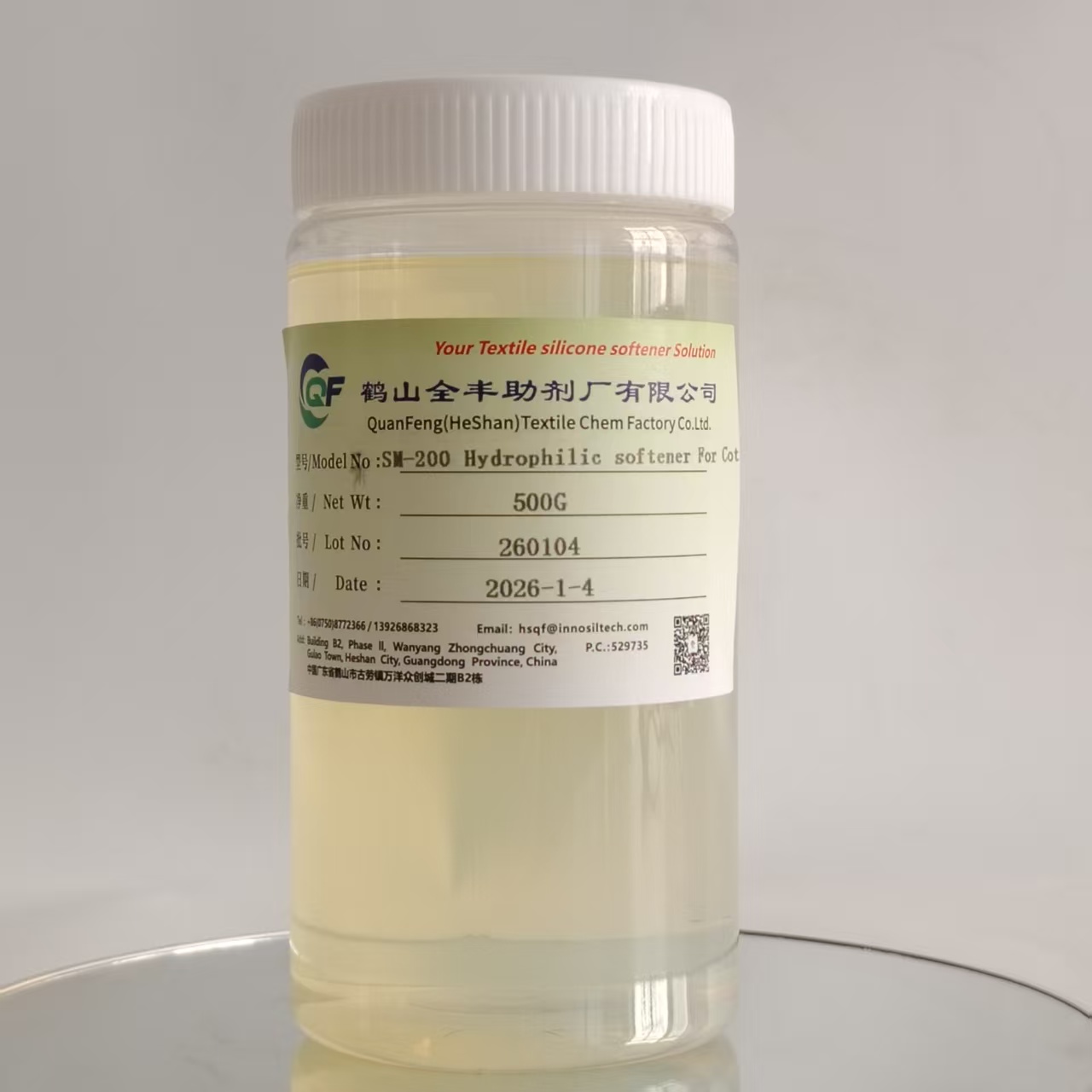
Table of Contents
- Why Standard Silicone Chemistry Is Usually Hydrophobic
- What Makes A Silicone Softener Hydrophilic
- Why Fabric Type Changes The Answer
- The Difference Between Conventional And Hydrophilic Silicone Softeners
- How Mills Evaluate Hydrophilicity In Real Production
- Why Hydrophilic Silicone Is Important In Modern Textile Finishing
- How To Choose The Right Silicone Softener
- How INNOSILICONE Supports Hydrophilic Finishing Needs
- Conclusion
Why Standard Silicone Chemistry Is Usually Hydrophobic
Traditional silicone softeners are built on polysiloxane structures that naturally have low surface tension and strong slip performance. These properties are excellent for improving softness, elasticity, and smooth hand feel, but they also mean the finished surface often repels water more than untreated fabric. This is why some conventional silicone finishes can reduce towel absorbency or slow the wetting speed of cotton and blended fabrics.
In practical production, this does not mean silicone is unsuitable. It means the base silicone structure by itself is not always enough when the fabric also needs fast wetting or moisture transfer. The final result depends on how the silicone is modified and how it is applied in the finishing process.
What Makes A Silicone Softener Hydrophilic
A hydrophilic silicone softener is usually a modified silicone system that includes functional groups or structural features designed to improve affinity for water. These modifications help the finished fabric keep a soft hand while allowing moisture to spread and penetrate more easily across the fiber surface.
The goal is balance. If a softener is too hydrophobic, the hand feel may be excellent but the fabric can lose absorbency. If a softener is highly wettable but poorly balanced, the softness effect may be weaker than expected. A well-developed hydrophilic silicone softener is engineered to give both benefits in a stable way.
This is one reason why textile finishing mills often move away from basic generic silicone products and choose more application-specific chemistries for knitwear, towels, home textiles, and technical fabrics.
Why Fabric Type Changes The Answer
Whether a silicone softener behaves as hydrophilic also depends on the substrate. Cotton fabrics usually show absorbency changes more clearly because the base fiber itself is hydrophilic. If a heavy hydrophobic film covers the surface, the loss in wetting is easy to notice. Polyester behaves differently because the fiber is already less absorbent, so the softener is often expected to improve handle and smoothness more than water uptake.
For towels, baby fabrics, underwear, and skin-contact textiles, hydrophilicity is usually a key requirement. For some outerwear or fashion fabrics, a smoother and more water-repellent surface may actually be preferred. That is why the same silicone softener cannot be considered ideal for every textile category.
A practical textile silicone softener selection starts from the end-use requirement rather than the chemistry name alone.
The Difference Between Conventional And Hydrophilic Silicone Softeners
The table below shows the practical difference between the two directions in textile finishing.
| Type | Main Performance Focus | Moisture Behavior | Typical Use Direction |
|---|---|---|---|
| Conventional silicone softener | Smoothness, slip, soft touch | Often more hydrophobic | Fashion fabrics, surface feel improvement |
| Hydrophilic silicone softener | Softness with absorbency retention | Better wetting and water transport | Towels, knitwear, underwear, functional textiles |
This comparison helps explain why the answer to the title question is not simply yes or no. Silicone softeners can be hydrophilic, but only when the formulation is intentionally designed that way.
How Mills Evaluate Hydrophilicity In Real Production
In real finishing plants, hydrophilicity is judged by fabric performance rather than product description alone. Mills often look at wetting speed, water drop absorption, capillary rise, and repeated wash performance. A silicone product may appear hydrophilic in a fresh lab test but lose that effect after curing or after several washing cycles if the formulation is not stable enough.
That is why application testing is essential. The finishing pickup, curing temperature, and bath compatibility all influence the final result. Even a well-designed hydrophilic silicone softener can perform poorly if dosage is too high or if it is combined with incompatible auxiliaries that form a more water-resistant surface film.
Why Hydrophilic Silicone Is Important In Modern Textile Finishing
Today, many textile buyers want fabrics that feel soft without sacrificing function. Towels must stay absorbent. Sportswear and innerwear need moisture transfer. Home textiles must maintain comfort during repeated use and washing. In these cases, the finishing chemistry has to support both sensory and technical performance.
Hydrophilic silicone systems help mills meet this expectation by reducing the traditional trade-off between softness and absorbency. Instead of choosing one and losing the other, finishers can target a more balanced hand feel and wetting profile. This is especially important in competitive textile markets where the difference in touch and comfort often decides product value.
A custom silicone softener approach becomes especially useful here, because different mills run different fibers, recipes, and curing systems. A product optimized for one towel line may not be ideal for a knitwear plant using different machinery and process conditions.
How To Choose The Right Silicone Softener
Choosing the right silicone softener starts with one practical question: what should the fabric still be able to do after finishing. If absorbency, fast wetting, or moisture movement are important, then a hydrophilic silicone solution should be considered from the start. If the top priority is luxurious hand feel and surface smoothness, a more conventional silicone route may still be appropriate.
The second question is process compatibility. The softener must remain stable in the finishing bath and perform consistently during padding, drying, and curing. The third question is durability. Some finishes look impressive at first but weaken after washing. Long-term consistency is what makes a finishing system commercially reliable.
How INNOSILICONE Supports Hydrophilic Finishing Needs
INNOSILICONE focuses on silicone solutions for textile and leather finishing, including products designed to balance softness, smoothness, and functional performance. If your fabric needs both comfort and moisture-friendly behavior, reviewing a more targeted hydrophilic silicone softener solution is usually more effective than testing random general-purpose products. You can browse relevant options and product directions on our textile and leather silicone softeners page.
Conclusion
Silicone softeners are not all hydrophilic. Conventional silicone systems are often naturally more hydrophobic, while hydrophilic silicone softeners are specially engineered to improve softness without severely reducing water absorbency. The right choice depends on the fabric type, finishing goal, and process conditions. For towels, knitwear, underwear, and other moisture-sensitive textiles, selecting the correct hydrophilic silicone route can make a major difference in final fabric performance.
If you are comparing finishing options and want to improve both hand feel and absorbency, contact INNOSILICONE with your fabric type, process method, and target result. Our team can help you identify a suitable silicone softener solution and support your application testing with practical recommendations.