



Are Grease Lubricants Creating Contamination Problems In High-Precision Assembly Lines?
In a high-precision assembly line, lubrication is necessary, but visible grease can quickly become a problem. Grease may reduce friction, but it can also migrate to nearby parts, attract dust, stain packaging, affect inspection, or make clean assembly harder to control. For automotive parts suppliers, precision metal component factories, fastener manufacturers, and mechanical assembly plants, this becomes more than a maintenance issue. It can affect product cleanliness, assembly stability, and customer acceptance.
A Dry Film Lubricant coating gives manufacturers another direction when wet grease is not suitable. Instead of leaving an oily layer that can move during handling, a cured dry film can provide anti-friction performance on selected metal surfaces while keeping the assembly area cleaner.
Table of Contents
When Grease Solves One Problem And Creates Another
Clean Parts Can Become Dirty Before Final Inspection
In many factories, parts are machined, cleaned, coated, inspected, packed, and shipped through several workstations. If grease is added too early or applied too heavily, it may spread during handling. A part that leaves one station clean may arrive at the next station with oily marks, dust, or fingerprints trapped in the lubricant.
For precision parts, this is a serious problem. Customers may reject the batch not because the part cannot function, but because the surface condition does not meet their cleanliness requirement. In automotive, Electronics, sealing, spring, clip, and metal fitting applications, surface contamination can create extra cleaning work before assembly.
Dust Attraction Can Change The Friction Result
Grease can hold dust, metal particles, packaging fibers, or workshop debris. Once contamination enters the contact area, friction may become less stable. The part may feel sticky, rough, or inconsistent during movement.
This is why some manufacturers look for dry lubrication when the assembly needs lower contamination risk. The goal is not simply to remove grease. The goal is to make friction control cleaner and more predictable.
Why Dry Film Lubrication Fits Precision Assembly Needs
Lubrication Without A Wet Surface
A Dry Film Lubricant coating forms a solid lubricating layer after application and curing. This makes it useful where oils and greases are difficult to retain, not allowed, or likely to create contamination.
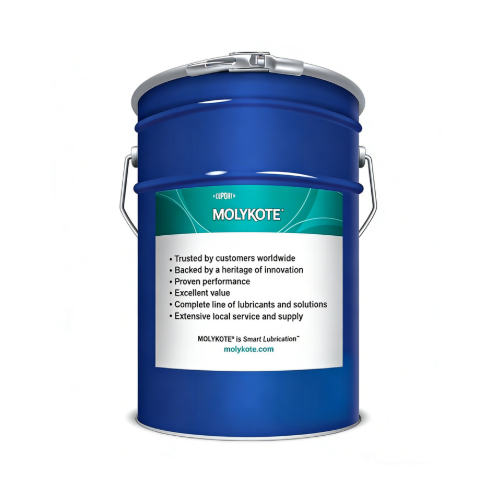
We are INNOSILTECH, and Molykote D-7620 is a grayish-black dry film lubricant designed for highly stressed metal-to-metal applications. It uses solid lubricants such as molybdenum disulfide and graphite in an organic binder system, then forms a durable film after heat curing.
For assembly buyers, this matters because the lubrication effect becomes part of the treated surface rather than a loose grease layer added during final assembly.
Better For Parts That Must Stay Clean In Packaging
Exported precision parts often need clean packaging. If grease transfers to bags, trays, cartons, or nearby components, the customer may see the shipment as poorly controlled. A dry film approach can help reduce oily transfer and make the packed parts easier to handle after arrival.
This is especially useful for parts that are shipped to another factory for final assembly. The receiving team does not want to clean each part again before use.
Where Grease Contamination Hurts Production Most
Fasteners And Threaded Parts
Threaded parts need stable friction behavior. If grease is uneven, torque control may become inconsistent. Too much lubricant may reduce friction beyond the target range. Too little may cause galling or assembly difficulty.
Dry film lubrication can support more controlled surface behavior when the coating is applied and cured properly. For fastener suppliers, this can help reduce assembly variation and improve repeatability.
Springs, Clips, And Sliding Metal Contacts
Springs, clips, and sliding interfaces often work under vibration, pressure, or repeated movement. Grease may be displaced over time, especially in exposed or high-temperature areas. Once grease moves away from the contact surface, noise, wear, or fretting corrosion may appear.
Molykote D-7620 is suitable for springs, clips, valves, sealing components, gaskets, and highly stressed sliding areas where dry lubrication is preferred. Its service temperature range from -70°C to 300°C also makes it useful for demanding mechanical environments.
High-Temperature Assemblies
Wet lubricants can soften, migrate, smoke, or lose performance in high-temperature applications. In those cases, a cured dry film can provide a more stable lubrication layer. This is useful for metal interfaces near exhaust systems, gasket areas, and other heat-exposed assemblies.
Coating Selection Should Start From The Assembly Problem
Do Not Choose Only By Lubricant Name
A lubricant that works well in one assembly may not fit another. Buyers should first define the actual problem: dust attraction, grease migration, torque variation, high-temperature wear, fretting corrosion, cleaning difficulty, or packaging contamination.
After the problem is clear, the factory can decide whether grease, oil, paste, or dry film coating is more suitable.
Application And Curing Must Be Planned
Molykote D-7620 can be applied by brushing, roller coating, or coil coating and requires heat curing. For factories, this means the coating step should be planned before mass production begins. The buyer should check whether the parts can handle the curing process, whether the coating thickness is suitable, and whether the treated surface still meets dimensional and assembly requirements.
A dry film lubricant is not simply brushed on at the last minute. It needs a controlled process to deliver stable results.
What Buyers Should Confirm Before Bulk Use
Practical Checks For Production Teams
Before using Dry Film Lubricant Coating in regular production, buyers should review:
Base metal material
Contact pressure
Sliding or vibration condition
Working temperature
Cleanliness requirement
Packaging method
Curing condition
Coating application method
Required friction behavior
Customer inspection standard
These checks help avoid choosing the wrong lubrication method. They also help the supplier recommend a more practical solution for the assembly line.
Before Grease Becomes A Cleanliness Problem
Grease lubrication is still useful in many mechanical applications, but it is not always the best choice for high-precision assembly lines. When oily transfer, dust attraction, packaging stains, or unstable friction become regular complaints, dry film lubrication deserves a closer look.
We are INNOSILTECH. If your factory is working with metal fasteners, springs, clips, gaskets, valves, sealing components, or sliding parts, you can share the working temperature, contact condition, cleanliness requirement, and assembly process with us. Our team can help review whether Molykote D-7620 is suitable before you move into larger production planning.